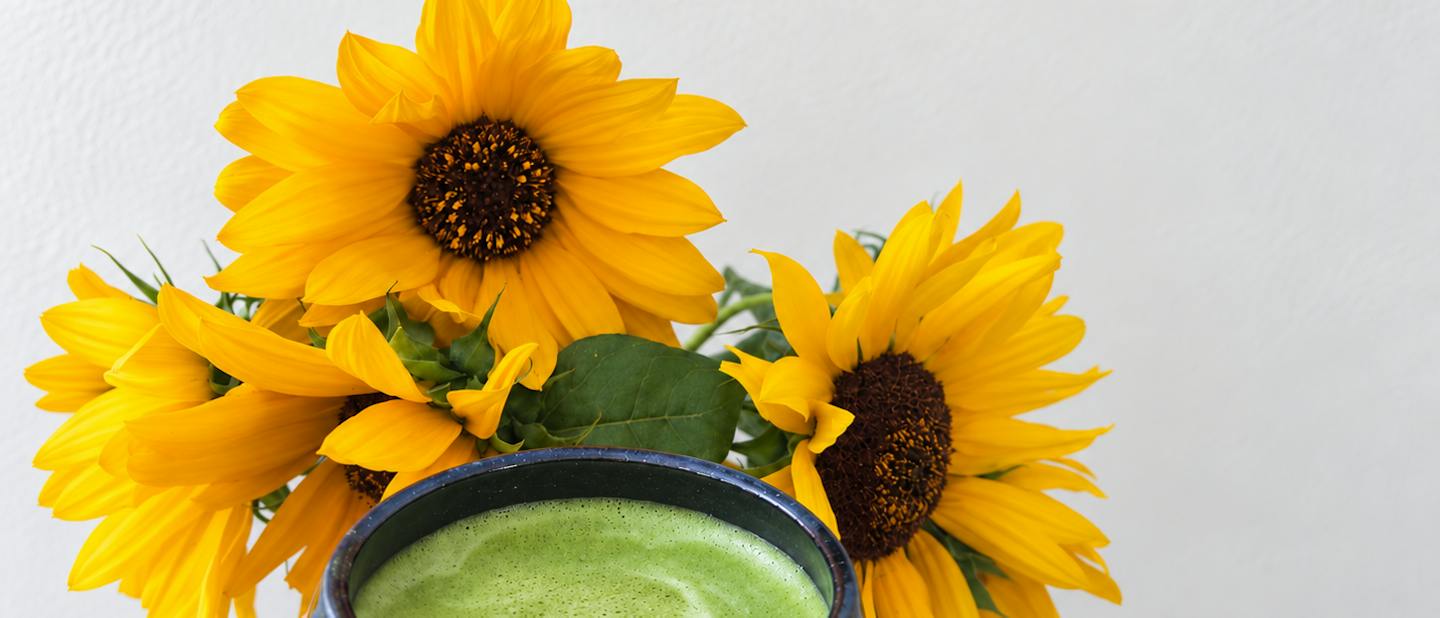
How to prepare matcha at home
When making matcha, three things matter most: the amount of matcha, the water temperature and the way you whisk it. Start with a small amount of water, make a smooth base, then finish it with water, milk or ice.
What you need
- 1–2 g of matcha
- 60–70 ml water at 75–80 °C (20–30 ml for the base)
- a fine sieve
- a bamboo whisk chasen or an electric frother
- a wide cup or bowl for whisking
If you use a scale, 1–2 g is a good range to start with. Without one, begin with around ½ a level teaspoon. For a stronger cup, gradually increase the amount towards one teaspoon. Teaspoons vary, so this is always an approximate measure.
If you’re using a chasen, soak it in warm water for a few seconds before whisking. This softens the bamboo and makes the tines more flexible.
How to prepare matcha
Step 01
Sift the matcha
Sift 1–2 g of matcha into your cup. If you’re new to matcha, start with less; for a more intense cup, increase the amount next time. Sifting breaks up small clumps and makes it much easier to create a smooth base.
Step 02
Make a smooth base
Add around 20–30 ml of water at 75–80 °C and whisk the matcha into a smooth, even base without clumps.
No kettle nearby? Room-temperature water works too. The important part is starting with a small amount of water and mixing the matcha thoroughly.
Step 03
Whisk and finish
Move the chasen quickly from the wrist back and forth in an M or W motion. After around 15–20 seconds, you should have a smooth base with a fine layer of foam.
For a classic cup, add around 40 ml more water (60–70 ml in total). Add 150–200 ml of milk for a latte. Or pour it over ice for a cold matcha.
A good starting point
1–2 g matcha · 60–70 ml water at 75–80 °C · 15–20 seconds
Make the base with 20–30 ml first, then add the rest of the water, milk or ice. Start lighter and adjust the amount of matcha until you find your preferred intensity.
What if you don’t have a bamboo whisk?
A chasen gives you the finest, most even texture, but it isn’t the only option.
Electric frother
Make a smooth base with 20–30 ml of water first. Froth it, then add water or milk.
Jar or shaker
Shake the matcha with a small amount of water first, then add more water, milk or ice. Particularly useful for cold matcha.
How to make a matcha latte
A latte starts with the same base: 1–2 g of matcha and 20–30 ml of water.
Once the matcha is smooth and frothy, add around 150–200 ml of cold or steamed milk.
For an iced matcha latte, pour the base over plenty of ice and add cold milk. Cold preparation gives matcha a fresher, cleaner profile, bringing sweetness, umami and softer green notes forward while bitterness feels less prominent.
Why does matcha taste bitter?
Some bitterness is a natural part of green tea. If your matcha tastes noticeably bitter or astringent, check these first:
The water is too hot.
Try around 75–80 °C. For cold matcha, you can also use cold or room-temperature water.
The amount isn’t right for you.
If the cup feels too intense, use slightly less matcha next time or add more water or milk.
The matcha itself also matters.
Origin, cultivar, harvest, shading, processing and freshness all influence the final cup.
How to store matcha
Matcha is sensitive to light, heat, air, moisture and strong odours.
Close the packaging well after each use and store it somewhere cool and dark. If you keep it in the fridge, let the sealed package come closer to room temperature before opening it. This helps reduce the risk of condensation forming on the cold powder.
Once opened, matcha is best enjoyed as fresh as possible.
Frequently asked questions
How much matcha should I use for one cup?
Start with 1–2 g and 60–70 ml of water. Without a scale, begin with around ½ a level teaspoon and increase it to taste. A smaller amount is often an easier starting point if you’re new to matcha.
Do I need to sift matcha?
It isn’t essential, but it is recommended. A fine sieve removes clumps and makes it easier to create a smooth base.
What temperature should the water be?
75–80 °C is a good starting point for warm matcha. If you don’t have a kettle or you’re making it cold, cold or room-temperature water works too.
Why does matcha settle at the bottom?
Matcha is finely ground tea leaf suspended in water rather than a tea infusion, so a little settling is completely normal.
How much caffeine does matcha contain?
The amount varies between matchas and also depends on how much powder you use. If you want less caffeine, start with a smaller amount of matcha.
