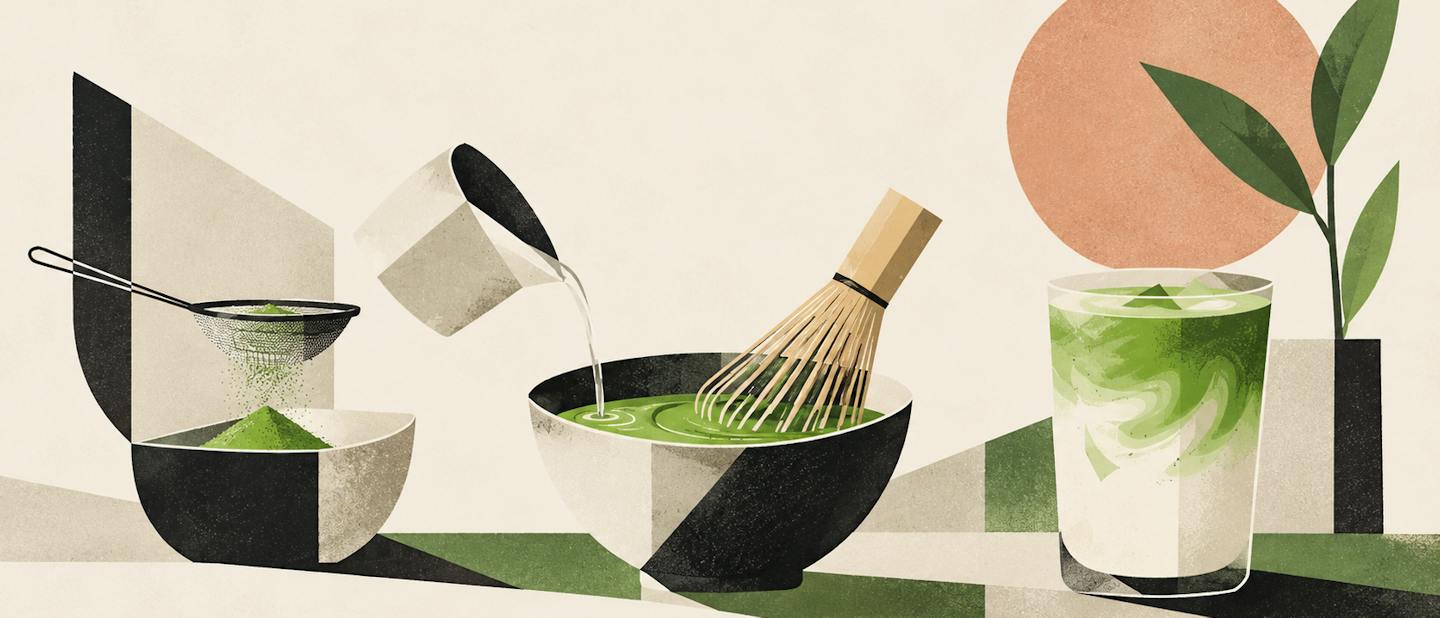
Matcha Latte Recipe Without Bitterness
Learning how to make a matcha latte is mostly about getting the base right. Start with a small amount of water, whisk the matcha until smooth, then add milk. Once you have the base, you can easily adjust the strength, temperature and milk to your taste.
What you need for a matcha latte
- 1–2 g of matcha
- 20–30 ml water
- 150–200 ml milk
- a fine sieve
- a bamboo whisk chasen or a small electric frother
If you use a scale, 1–2 g is a good range to start with. Without one, begin with around ½ a level teaspoon. If you prefer a more pronounced matcha flavour, gradually increase the amount.
Spoon measurements are approximate, so a small scale is the most consistent option.
How to make a matcha latte
Step 01
Sift the matcha
Sift 1–2 g of matcha into your cup. Matcha is an extremely fine powder and naturally forms small clumps, so this quick step makes it much easier to create a smooth latte.
Step 02
Make a smooth matcha base
Add around 20–30 ml of water at 75–80 °C. Whisk until the matcha is smooth and a fine layer of foam begins to form.
With a chasen, move quickly back and forth from the wrist in an M or W motion rather than stirring in circles.
No kettle nearby? Room-temperature water works too, especially if you’re making an iced matcha latte.
Step 03
Add milk
Add around 150–200 ml of milk. Use warm or steamed milk for a hot latte, or pour the matcha base over ice and finish with cold milk for an iced version.
A good starting point
1–2 g matcha · 20–30 ml water · 150–200 ml milk
Start lighter if you’re new to matcha. Once you know the flavour, adjust the matcha and milk to your preferred intensity.
How to make an iced matcha latte
Start with exactly the same matcha base: 1–2 g of matcha whisked with 20–30 ml of water.
Fill a glass generously with ice, pour in the matcha base and finish with 150–200 ml of cold milk.
Cold preparation often gives matcha a fresher, cleaner impression. Sweetness, umami and softer green notes can feel more noticeable, while bitterness is less prominent.
How to make a hot matcha latte
Prepare the same smooth matcha base, then add steamed milk.
Around 55–65 °C is a useful range for milk if you want a soft, stable microfoam without overheating it.
Which milk works best for a matcha latte?
There isn’t one correct choice. The best milk is the one that gives you the texture and flavour you like.
Whole dairy milk
Full and creamy, with naturally good microfoam.
Oat milk
Soft and slightly sweet. A barista version usually gives a more stable, creamy texture.
Soy milk
Creamy and easy to foam, with a more noticeable flavour of its own.
Coconut milk
Especially good in iced matcha if you like a sweeter, slightly tropical profile.
Does the matcha itself matter?
Yes. Milk softens the flavour of matcha, but it doesn’t completely hide it.
Instead of relying only on labels such as ceremonial grade, look at origin, cultivar, harvest, processing and freshness. These details tell you much more about what to expect in the cup.
MiMA Matcha is a single-cultivar Samidori from Uji, Kyoto, made from the first spring harvest and traditionally stone-ground.
Do you need to sweeten a matcha latte?
Not necessarily. Many milks already add enough sweetness to balance the matcha. Taste the latte first and add sweetener only if you feel it needs it.
Maple syrup, honey or a small amount of simple syrup all work well. The goal is to round out the flavour, not cover the matcha.
How to make a matcha latte without a bamboo whisk
A chasen gives a very fine, even texture, but you don’t need one to make a good latte.
With an electric frother
Add matcha and 20–30 ml of water to a cup and mix until smooth. Then add your milk.
With a jar or shaker
For an iced latte, shake the matcha with a small amount of water until smooth, then add ice and milk. The important part stays the same: make the smooth matcha base first.
Why does my matcha latte taste bitter?
A little bitterness is natural. If your matcha latte tastes strongly bitter or astringent, check these first:
The water is too hot.
Try 75–80 °C. For an iced latte, cold or room-temperature water works too.
You’re using more matcha than you enjoy.
Start with a smaller amount and increase it gradually.
The ratio is too concentrated.
Add a little more milk before reaching for sweetener.
The matcha itself also matters.
Origin, cultivar, harvest, processing and freshness all influence the final cup.
Matcha latte FAQ
How much matcha should I use for a latte?
Start with 1–2 g. Without a scale, around ½ a level teaspoon is an easy starting point. Increase the amount if you want a stronger matcha flavour.
Can I make a matcha latte with cold water?
Yes. Cold or room-temperature water works especially well for iced matcha. Start with only 20–30 ml and whisk or shake until smooth before adding milk.
What is the best milk for a matcha latte?
Whole dairy milk gives a creamy texture, while barista oat milk is a good plant-based option. Soy and coconut milk work well too. Choose according to the flavour and texture you prefer.
Do I need a bamboo whisk for a matcha latte?
No. A chasen creates a very fine texture, but a small electric frother works well too. For iced matcha, a jar or shaker is another simple option.
Why does matcha form clumps?
Matcha is extremely finely ground and naturally clumps. Sifting it first and starting with only 20–30 ml of water makes it much easier to create a smooth base.
