How to choose good matcha
Most matcha sold today as "ceremonial grade" doesn't deserve the label.
That's not cynicism — it follows from a simple fact: ceremonial grade is not an official Japanese standard. Japan has no such classification. It's a marketing term invented by Western markets, now printed on packaging by just about everyone.
Which doesn't mean quality differences don't exist. It means the label alone tells you nothing.
Five things that actually matter
1. Region
Not "Japan" — that's not enough. Matcha has regions the way wine does.
Uji, south of Kyoto, is the reference point. Over 800 years of tea gardens, a specific microclimate, generational knowledge passed between farmers. It's where Ippodo, Marukyu Koyamaen, and every serious Japanese tea house trace their standards.
Matcha from Nishio, Kagoshima, or Shizuoka can be good. But Uji is Uji.
2. Cultivar
Most mass-market matcha is a blend — a mix of leaf varieties for consistent flavour year to year. Not necessarily bad. But single-cultivar matcha has a more distinct profile.
Samidori: vivid green colour, smooth umami, no bitterness. Gokō: intense sweetness, deep flavour. Okumidori: earthy, complex.
If a seller can't tell you the cultivar — that's information in itself.
3. Harvest
Ichibancha — first spring harvest. The youngest leaves, highest L-theanine, highest chlorophyll. Limited quantity, higher price.
Later harvests are cheaper and more bitter. They're rarely labelled as such.
4. Milling
Granite stone mills, low speed, small batches. One mill produces around 40 grams per hour. The slowness is deliberate — heat from faster milling destroys the aromatics.
Industrial matcha is milled faster. The difference shows in colour and taste.
5. Lab testing
Mandatory for all food imports into the EU. A serious seller has the certificates and shows them without hesitation. Pesticide and heavy metal documentation isn't a bonus — it's the minimum.
What this looks like in practice
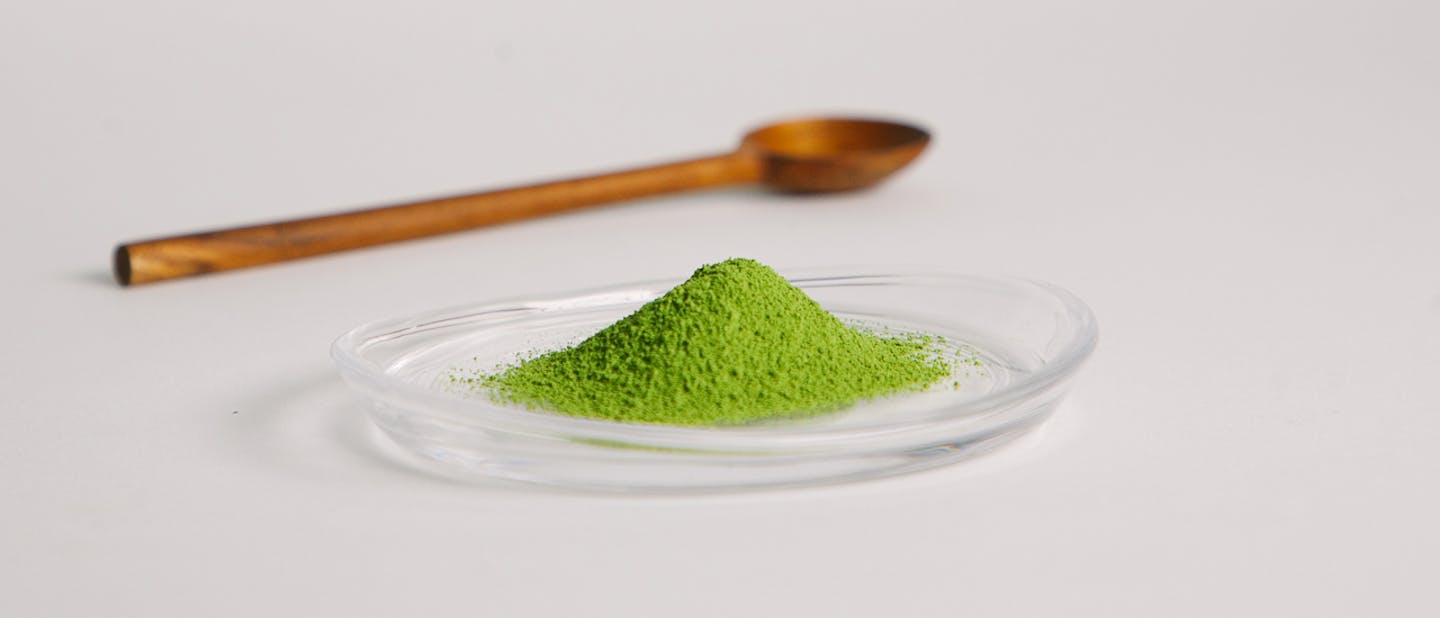
Good matcha is vivid green. Not olive, not yellowish. Colour is the simplest indicator of freshness and leaf quality.
Good matcha isn't bitter. Bitterness when drinking with water means either low quality or water that's too hot. Use 70–80°C — never boiling. Quality first-flush matcha is naturally creamy and slightly sweet.
Good matcha costs between €25 and €40 for 30g. That's roughly €1.20 per cup. Cheaper matcha is cheaper for a reason.
MiMA
MiMA Matcha is sourced directly from Uji, Kyoto.
Cultivar: Samidori.
Harvest: ichibancha.
Milling: granite stone mills in Kyoto.
Testing: independent EU laboratory.
30g, 30€.
Delivery across the EU.