What is matcha?
Japanese green tea made from shaded leaves, ground into a fine powder. Because it is whisked into water, you drink the whole leaf.
How matcha is made
Matcha is made from tencha, a tea grown specifically for milling. It takes four steps to reach your cup.
Shading
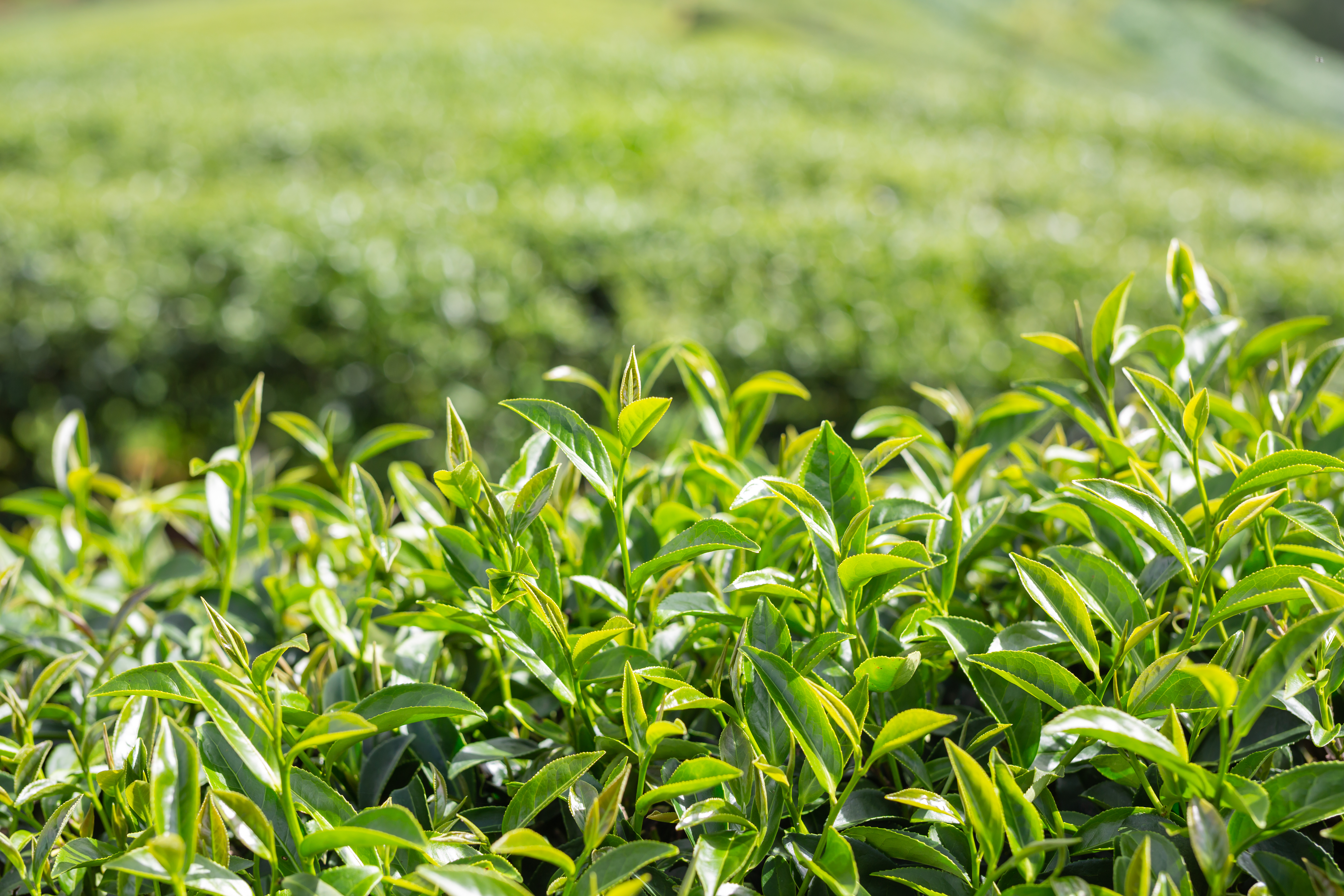
A few weeks before picking, the tea bushes are covered. The leaves build more chlorophyll, so matcha is bright green and less bitter.
First harvest
Young spring shoots (ichibancha) contain more L-theanine than later harvests. In the cup this means more umami and less astringency.
Tencha
The leaves are briefly steamed, dried without rolling, and cleared of stems and veins.
Stone milling
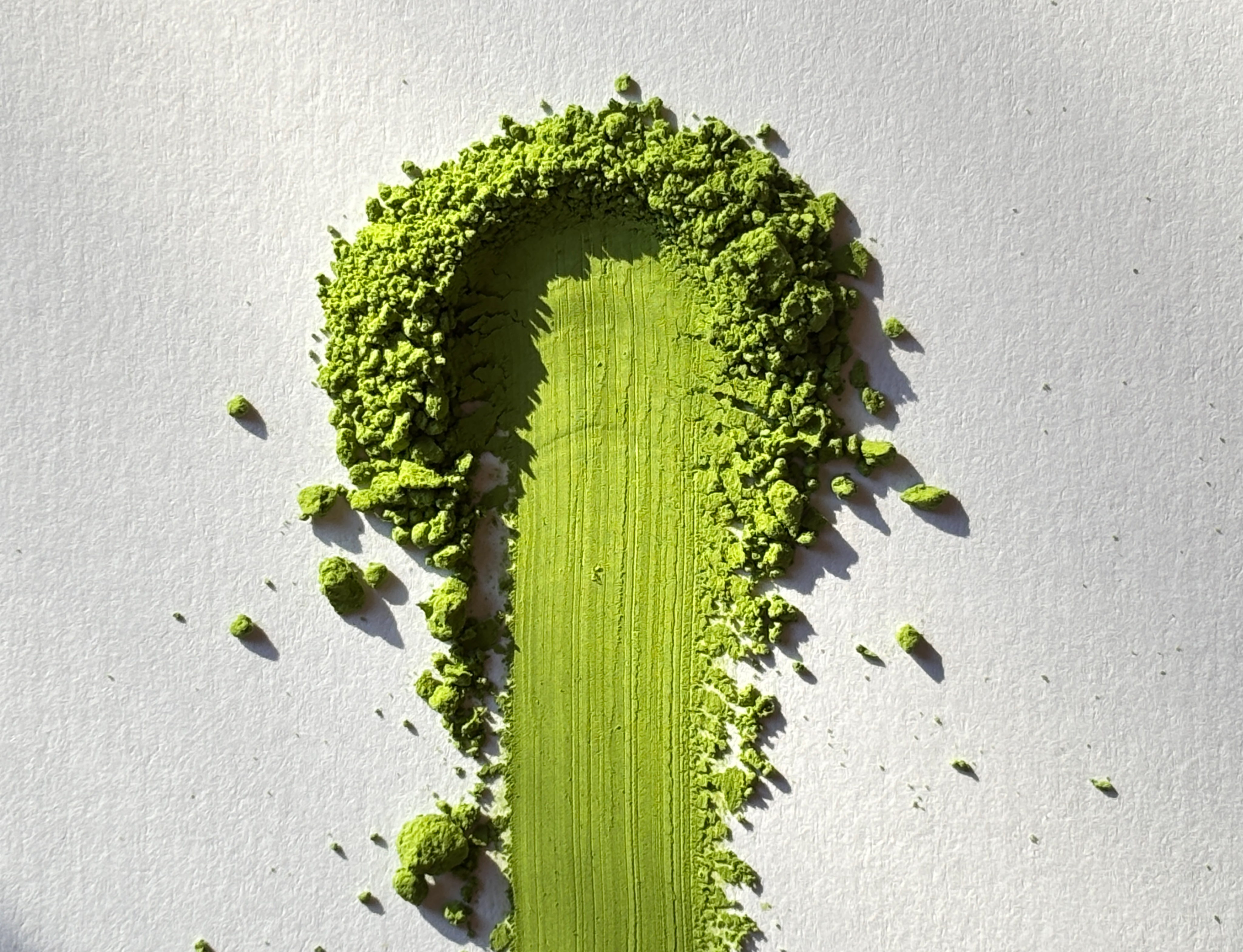
A stone mill (ishi-usu) grinds slowly: a single mill produces only about 30 g of matcha per hour, which gives an even, fine powder. Our matcha is milled in small batches.
Ceremonial
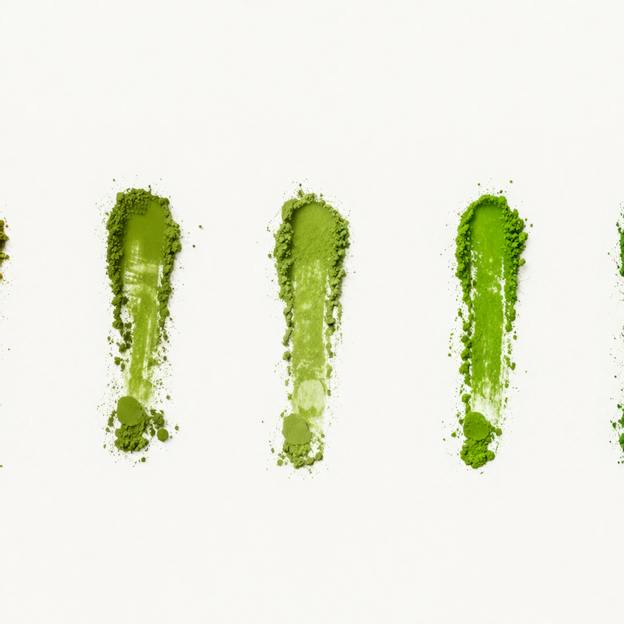
The term comes from the Japanese tea tradition chanoyu, where matcha is prepared with water only. It has to be smooth enough to drink on its own.
There is no official definition, so the label on the pouch says less than it seems.
Culinary matcha is made for baking and mixed drinks. It often comes from later harvests, so it is more astringent. More in Not All Matcha Is the Same.
Knowing
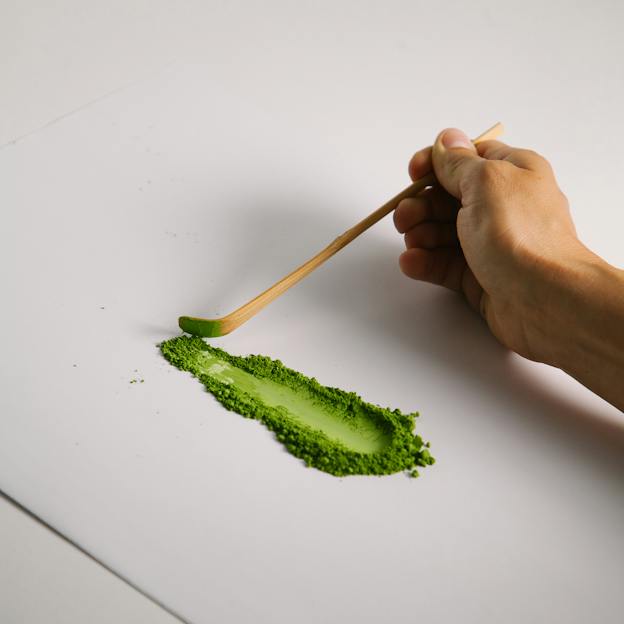
What to check before buying matcha? The label ceremonial grade does not guarantee quality on its own. Origin, tea cultivar, harvest time, milling date and lab analyses tell you more.
Origin
Uji in Kyoto prefecture is considered one of Japan's most important regions for quality green tea. Our matcha comes from there, made by a family tea house with a long tradition.
Tea cultivar
Different cultivars have different flavour and aroma profiles. We use Samidori only, a cultivar known for pronounced umami, a gentle taste and low bitterness. No blending of cultivars.
Harvest
The first spring harvest (ichibancha) is valued for the quality of its young leaves. Our current batch comes from the first spring harvest of 2026.
Milling date
After milling, matcha gradually loses aroma and freshness, so the milling date matters more than it may seem. The current batch was milled between 18 July and 13 October 2026, traditionally on stone mills. We publish the milling date on the product page; the lot number is on the pouch.
Lab analyses
Verified food safety matters with matcha too. Independent EU laboratories analyse it for pesticide and herbicide residues and check compliance with EU requirements. Reports are available on request.
To learn how matcha differs in quality, colour and taste, read our guide How to choose good matcha.
How we prepare matcha
With water
1.5 g · 60–70 ml · 75–80 °C
Sift into a cup and whisk with a bamboo whisk in a W motion until a fine foam forms.
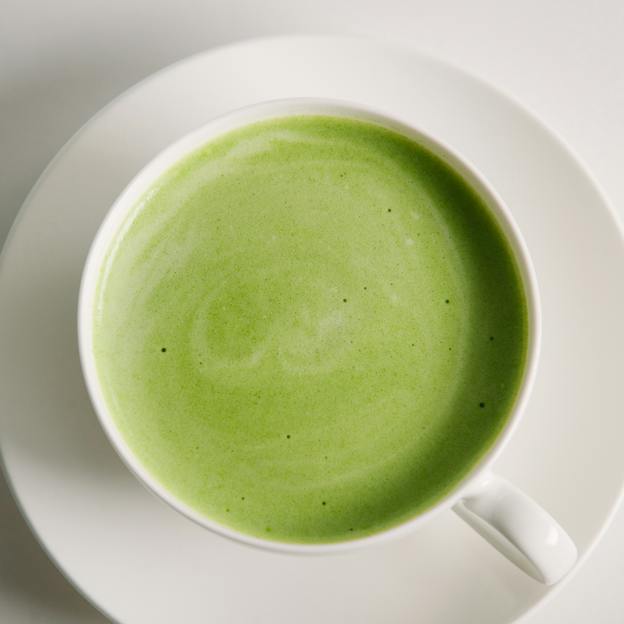
Latte
1.5 g · 20 ml water · 150–200 ml milk
Mix matcha and water into a smooth base, then top up with warm milk. Full recipe.
Boiling water brings out bitterness, so we don't use it. Once opened, we seal the pouch well and keep it in the fridge.

MiMA
100% Samidori from Uji, first spring harvest 2026, stone-milled between July and October 2026. Tested by an independent EU laboratory.
30 g pouch (20 cups) or 100 g (66 cups).